

"The Money Lessons Your Children Will Remember"
Think back to when you were a child.
Do you remember your first experience with money?
Maybe someone handed you a few coins and told you to buy something.
Maybe you had a small allowance.
Maybe you watched your parents struggle to make ends meet.
Maybe money was never discussed at home.
Perhaps you heard things like:
“We can not afford that.”
“Money does not grow on trees.”
“Rich people are lucky.”
Or maybe you learned something very different.
Whatever your experience was…
It probably shaped the way you think about money today.
And here is the uncomfortable truth:
Our children are learning about money whether we teach them or not.
The question is…
Who—or what—is teaching them?
Children Learn More From What We Do
You can tell your child to save money every week.
But if they constantly watch you spend impulsively, they are learning something else.
You can tell them that debt is dangerous.
But if borrowing is treated as the normal solution to every financial problem, they are watching a different lesson.
You can tell them to work hard.
But if they never see you plan, save, invest, or make thoughtful financial decisions, they may not understand what financial responsibility actually looks like.
Children do not just listen to our financial lessons.
They watch our financial lives.
That is why your example may be one of the greatest financial lessons you ever give them.
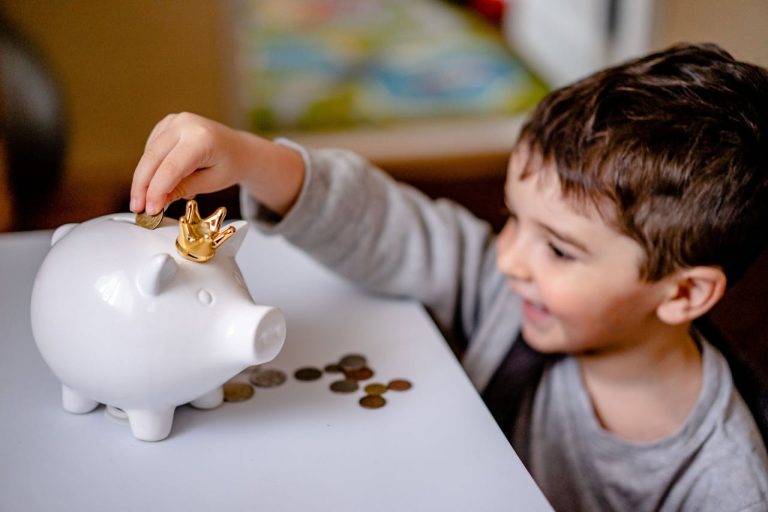
Start With Simple Conversations
You do not need to sit your six-year-old down for a lecture about compound interest.
Start small.
When they want something, talk about choices.
“We have enough money for one of these. Which one is more important to you?”
When they receive money, teach them that it does not all have to be spent.
Some can be saved.
Some can be used.
Some can be given.
As they grow older, introduce more sophisticated concepts.
Needs versus wants.
Budgeting.
Saving.
Earning.
Debt.
Investing.
Giving.
Taxes.
Business.
The lessons can grow with the child.
Teach Them That Money Has a Purpose
Money is not simply something to spend.
It is a tool.
It can provide shelter.
Education.
Opportunity.
Security.
Experiences.
Generosity.
And eventually…
Freedom.
When children understand that money has a purpose, they begin to see it differently.
Instead of asking only:
“What can I buy?”
They can learn to ask:
“What can this money help me accomplish?”
That is a powerful shift.
Let Them Make Small Mistakes
One of the hardest things for a parent to do is watch a child make a financial mistake.
They spend their money on something silly.
Then later realize they should have saved it.
Your first instinct may be:
“I told you so!”
But sometimes the better lesson is:
“What did you learn?”
A small mistake with $5 can teach a lesson that could eventually save them thousands.
Do not protect children from every consequence.
Teach them how to learn from consequences.
Teach Them to Earn
Children should understand that money comes from creating value.
Give them age-appropriate opportunities to earn.
Helping with additional tasks.
Selling something they have made.
Learning a useful skill.
Starting a small project.
The amount does not matter as much as the lesson.
They begin to understand:
Income is created by providing something people value.
That mindset can become incredibly powerful as they grow.
Teach Them That Looking Rich Is not the Same as Being Wealthy
This lesson may be more important than ever.
Children see expensive phones.
Designer clothes.
Luxury cars.
Beautiful houses.
Influencers displaying seemingly perfect lifestyles.
It can create a dangerous belief:
“Having expensive things means you are successful.”
Teach them something different.
Someone can look wealthy and be drowning in debt.
Someone else can live modestly while quietly building significant wealth.
Wealth is not always visible.
Sometimes wealth looks like:
An emergency fund.
A paid-off home.
A profitable business.
Investments.
No unnecessary debt.
A retirement plan.
Financial peace.
Teach your children to value what lasts longer than appearances.
Teach Them to Give
Money is not only about accumulation.
It can also be used to help others.
Teach children generosity.
Let them experience the joy of giving.
Whether it is helping someone in need, contributing to a cause, or simply sharing what they have…
They learn that money is a tool for impact.
A healthy relationship with money is not only about asking:
“How much can I keep?”
It is also about asking:
“How can I use what I have wisely?”
Do not Hide Every Financial Reality
Protecting children from adult financial stress is important.
But completely avoiding money conversations can leave them unprepared.
Age-appropriate honesty matters.
They do not need to know every detail of your finances.
But they can understand that families have limits.
They can learn that choices have consequences.
They can learn that sometimes you wait before buying something.
They can learn that financial goals require patience.
Those lessons prepare them for adulthood.
Give Them Something More Valuable Than an Inheritance
Of course, leaving assets to your children can be valuable.
But imagine giving them something even more powerful:
The ability to create, manage, protect, and grow wealth themselves.
An inheritance can eventually disappear.
Financial wisdom can last for generations.
If you teach your child how to earn responsibly…
Save consistently…
Avoid destructive debt…
Invest wisely…
Build businesses…
Protect what they create…
And use money with purpose…
You have given them something that no bank account can fully measure.
Connie's Challenge
This week, have one money conversation with a child in your life.
Ask them:
“If someone gave you $10 today, what would you do with it?”
Do not correct their answer immediately.
Listen.
Then talk about their choices.
Ask:
“Would you spend all of it?”
“Would you save some?”
“Would you use some to create more money?”
“Would you give some away?”
You may be surprised by what they say.
And you may discover an opportunity to teach a lesson they will remember for years.
