
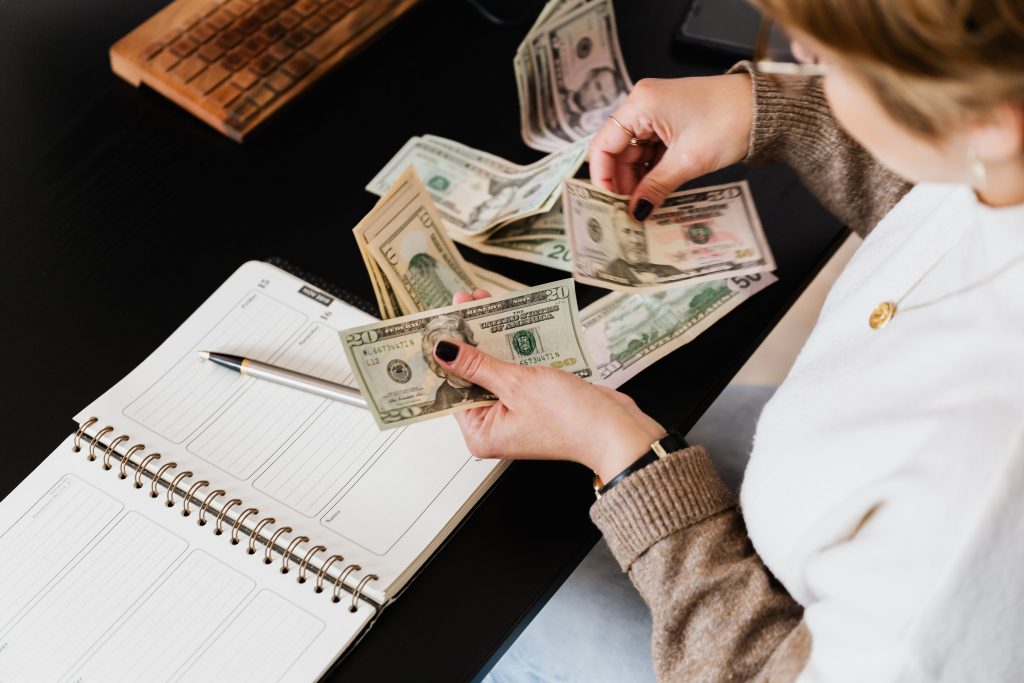
“What looks small today can become enormous when you give it enough time.”
There is a financial mistake many of us make.
We underestimate small things.
We think:
“It is only $100.”
“It is only $ 500.”
“It is only one month.”
“I will start next year.”
“It will not make much difference.”
But here is the truth:
“Small things become powerful when they are repeated for long enough.”
A small amount saved once may not change your life.
A small amount invested once may not change your life.
One good financial decision may not change your life.
But what happens when you repeat that decision for years?
That is where the magic begins.
It is called compounding.
What Is Compounding?
Let us make it simple.
Imagine you invest $100.
Your investment earns a return.
Instead of taking that return out, you leave it invested.
Now your original money is working.
And the money it earned can also begin working.
Then that new amount earns returns.
And those returns can earn returns.
That is compounding.
Investor.gov defines compound interest as interest earned on the original amount as well as accumulated interest.
In simple language:
Your money starts earning money, and that money can start earning money too.
That is why time matters so much.
The Snowball Effect
Imagine a small snowball rolling down a hill.
At the beginning, it is tiny.
But as it rolls, it picks up more snow.
Then it becomes bigger.
And because it is bigger, it can pick up even more snow.
That is how compound growth works.
Your money starts with your contributions.
Then it earns returns.
Those returns increase the amount working for you.
Then the larger amount can generate further returns.
Investor.gov uses the same snowball idea to explain compound growth and emphasizes the relationship between regular investing and time.
The important part is not how impressive the snowball looks at the beginning.
It is that you keep rolling it.
Why Starting Early Matters
Let us say two people decide they want to build wealth.
One starts investing at 25.
The other waits until 40.
The person who starts at 40 may eventually invest larger amounts.
But the person who started at 25 has something the other person cannot buy back:
time.
Time gives money more opportunities to compound.
This does not mean starting later is pointless.
Absolutely not.
Starting later is still better than never starting.
But it teaches us an important lesson:
Do not wait for the perfect financial moment.
Start learning.
Start planning.
Start building.
Start with what you can realistically manage.
Because the years are passing whether you invest or not.
Small Money Can Become Serious Money
Let us take a simple hypothetical example.
Suppose someone invests $50 every month for many years.
The first few months may not look exciting.
$ 50 does not look like wealth.
Even after the first year, the account may not feel life-changing.
But something important is happening.
The contributions are accumulating.
Returns may be accumulating.
And if those returns remain invested, they can themselves participate in future growth.
That is the compound effect.
The exact outcome will depend on the investment, returns, fees, taxes, contributions and how long the money remains invested.
There are no guaranteed investment returns.
But the principle remains:
Consistency + time can be powerful.
The Biggest Enemy May Not Be Your Income
Sometimes we think the only way to become wealthy is to earn a huge salary.
Of course, earning more can make wealth building easier.
But income is not the entire story.
Imagine someone earns $3000 a month but spends almost all of it.
Another person earns $ 800 but consistently saves, invests, builds skills and grows assets.
Their financial journeys can look very different.
This is why wealth is not simply about income.
It is about what happens to the money after it reaches your hands.
You can earn more.
Keep more.
Invest more.
And give your money more time to grow.
That is the bigger picture.
